What Are HPV and the HPV Test? What Do HPV Test Results Mean?
HPV, or Human Papillomavirus, is one of the most common viruses that can be transmitted through sexual contact. While some types of HPV cause genital warts, certain high-risk types may be associated with different types of cancer, particularly cervical cancer.
HPV infection usually progresses without causing symptoms, and a person may not realize that they carry the virus. Early detection of high-risk HPV types, particularly those associated with cervical cancer, is possible through regular screening tests.
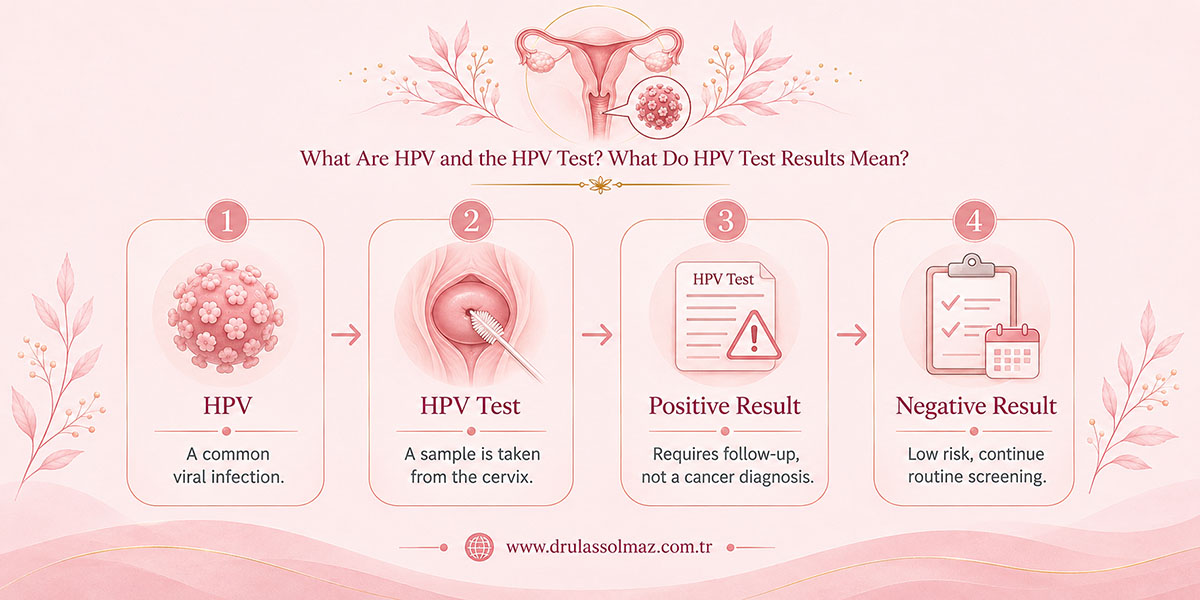
The HPV test is one of the important methods used in cervical cancer screening. It can be performed together with a Pap smear test or, when appropriate, on its own to help identify precancerous changes in the cervix at an early stage. A positive HPV test does not directly mean cancer; however, it indicates that closer follow-up may be necessary.
What Is HPV?
HPV is a virus that can cause infections of the skin and mucous membranes. More than 200 types of HPV have been identified. While some of these types cause temporary infections, others may lead to genital warts or contribute to the development of serious diseases such as cervical cancer.
HPV types are generally classified into two groups: low-risk and high-risk. Low-risk HPV types are mainly associated with genital warts. HPV 6 and HPV 11 are known as the low-risk types most commonly responsible for genital warts.
High-risk HPV types are important in the development of cervical cancer. HPV 16 and HPV 18 are among the types most strongly associated with cervical cancer. Other high-risk types, including HPV 31, 33, 45, 52, and 58, may also cause cellular changes in the cervix.
In most people, the immune system suppresses or clears the virus over time. Therefore, not every HPV infection develops into cancer. However, in some individuals, the virus may become persistent. Persistent infection with high-risk HPV types can lead to precancerous cellular changes in the cervix over several years.
What Is an HPV Test?
An HPV test is a screening test that detects HPV DNA in a swab sample collected from the cervix. The test determines whether high-risk HPV types associated with cervical cancer are present.
Although HPV testing is sometimes thought to involve blood or urine samples, the standard cervical HPV test is not performed using blood or urine. In women, HPV testing is performed using a cell or fluid sample collected from the cervix during a gynecological examination.
The purpose of HPV testing is to identify high-risk HPV types that may cause cervical cancer at an early stage. This allows precancerous lesions, if present in the cervix, to be detected before they progress to cancer so that appropriate treatment can be planned.
An HPV test can detect not only the presence of the virus but, with certain tests, also its specific type. This is particularly important for identifying high-risk types such as HPV 16 and HPV 18.
What Should You Consider Before an HPV Test?
To obtain more reliable HPV test results, it is important to consider certain precautions before testing:
- Avoid testing during menstruation: HPV testing is generally not recommended during menstrual bleeding. Bleeding may make it more difficult to evaluate the sample collected from the cervix.
- Avoid sexual intercourse before the test: It is recommended to avoid sexual intercourse for 24–48 hours before testing. This may help ensure that the collected sample can be evaluated more accurately.
- Do not use vaginal products: Vaginal douching should be avoided before testing, and vaginal creams, suppositories, or similar products should not be used. These products may affect the quality of the cervical sample.
- Avoid excessive cleaning: No special preparation is necessary before the test. Normal hygiene of the external genital area is sufficient. Perfumed products, intensive cleansing products, or vaginal applications should be avoided.
- Choose an appropriate testing time: The most suitable time for HPV testing is generally a few days after menstrual bleeding has completely ended. If a suspicious condition is present, the timing of the test should be determined by the physician.
How Is an HPV Test Performed?
HPV testing is a procedure that can be completed quickly during a gynecological examination. A swab sample is collected from the cervix using a special brush or swab. The sample is sent to a laboratory and examined for HPV DNA using molecular methods.
The HPV test usually takes only a few minutes. It is not painful for most patients. Mild pressure or brief discomfort may occur, but the procedure does not prevent patients from returning to their daily activities.
HPV testing can be performed during the same appointment as a Pap smear test. Samples collected during the same examination can be used to evaluate both the presence of HPV and cellular changes in the cervix.
If the patient has genital warts, the physician may also collect samples from the warts or suspicious lesions when necessary. However, for cervical cancer screening, the main evaluation is performed using a swab sample collected from the cervix.
The time required to obtain HPV test results may vary depending on the laboratory’s procedures. Results are generally available within a few business days. In some centers, DNA-based tests and genotyping tests may take longer.
I explain what happens when an HPV test is positive in the discussion presented in the video below.
Who Should Have an HPV Test?
HPV testing is primarily used for cervical cancer screening. Under Türkiye’s national screening program, HPV DNA testing is recommended every five years for women between the ages of 30 and 65.
Regular screening is extremely important for preventing cervical cancer at an early stage. This is because cervical cancer often develops from precancerous lesions, and this process may progress over several years. Screening tests allow these changes to be identified at an early stage.
HPV testing is not performed only in people who have symptoms. Women within the recommended age range are encouraged to participate in regular screening even when they have no symptoms. This is because high-risk HPV types often do not cause noticeable symptoms.
For individuals with HPV positivity, abnormal Pap smear results, a weakened immune system, or other risk factors identified by a physician, follow-up intervals and additional examinations may vary according to individual circumstances.
Where Can You Have an HPV Test in Türkiye?
HPV tests performed for screening purposes are available free of charge at centers affiliated with the Turkish Ministry of Health. Cancer Early Diagnosis, Screening and Training Centers (KETEM), Healthy Life Centers, and Family Health Centers are among the facilities where these screenings are provided.
Samples collected at Family Health Centers or relevant screening facilities are evaluated in laboratories. Patients are informed of the results and, when necessary, referred to appropriate healthcare institutions for further evaluation.
HPV testing is also available at private hospitals, medical centers, obstetrics and gynecology clinics, and certain private laboratories. At private facilities, the scope of testing, fees, and turnaround times may vary between institutions.
Is HPV Testing Performed in Men?
HPV is a virus that can affect both women and men. However, unlike HPV testing in women, routine HPV screening is not implemented as a standard screening program for men. In men, HPV is often identified through genital warts, lesions around the anus, or suspicious skin changes.
If a man has suspicious warts or lesions, evaluation may be performed by a urologist, dermatologist, or another relevant specialist. When necessary, a sample may be collected from the lesion or a biopsy may be performed.
General routine HPV screening in men is not as standardized as cervical cancer screening in women. Therefore, evaluation in male patients is generally planned according to symptoms, examination findings, risk factors, and the presence of lesions.
What Do HPV Test Results Mean?
HPV test results are generally interpreted as negative or positive. A negative result indicates that the high-risk HPV types included in the test were not detected in the sample. A positive result indicates that HPV DNA was detected.
A positive result does not mean that the person has cancer. However, closer follow-up may be necessary, particularly when high-risk HPV types are identified.
When interpreting the results, the physician considers not only HPV positivity but also the HPV type, Pap smear results, the patient’s age, previous tests, and examination findings. Therefore, HPV test results should always be evaluated by a specialist.
What Does HPV Positive Mean?
A positive HPV test indicates that one or more of the HPV types included in the test have been detected in the body. This result may cause anxiety for many people; however, HPV positivity does not directly mean that a person has cancer.
HPV infection is very common. In most people, the immune system can suppress or clear the virus over time. Therefore, HPV positivity alone is not a cancer diagnosis.
Nevertheless, regular follow-up is important, particularly when high-risk HPV types are detected. Because types such as HPV 16 and HPV 18 carry a higher risk of cervical cancer, the physician may recommend further examinations, such as colposcopy, depending on the Pap smear result and the patient’s overall condition.
In people with HPV positivity, smoking, poor dietary habits, conditions that weaken the immune system, and unhealthy lifestyle habits may influence the management of the infection. Maintaining a healthy immune system may support the body’s ability to control HPV infection.
What Happens If an HPV Test Is Positive?
When an HPV test is positive, the type of virus is evaluated first. Low-risk HPV types are mainly associated with genital warts. High-risk HPV types may require closer follow-up because of their association with cervical cancer.
This result is not a definitive diagnosis of disease but rather a finding that requires attention. The physician develops a follow-up plan by evaluating the HPV type, Pap smear result, patient’s age, and previous tests together.
For some patients, follow-up examinations at specific intervals may be sufficient, while others may require colposcopy. During colposcopy, the cervix is examined in detail using a special magnifying device. Small biopsies may be taken if suspicious areas are identified.
What If You Are HPV Positive but Have No Warts?
Having a positive HPV test without visible warts is common. High-risk HPV types, in particular, often do not cause genital warts and may remain asymptomatic.
The absence of warts does not mean that the virus is absent from the body. If the HPV DNA test is positive, the virus has been detected. In this situation, follow-up is planned according to the HPV type and Pap smear result.
A person who is HPV positive but has no warts does not necessarily need to panic. However, gynecological evaluation and regular follow-up should not be neglected, especially when high-risk HPV types are detected.
What Does HPV 16 Positive Mean?
HPV 16 positivity indicates that HPV 16, one of the high-risk HPV types, has been detected in the body. HPV 16 is one of the HPV types most commonly associated with cervical cancer.
A positive result does not mean that cancer has been diagnosed. However, HPV 16 positivity requires more careful evaluation. A follow-up plan is developed by considering the Pap smear test, examination findings, and previous screening results.
If necessary, the physician may perform a detailed examination of the cervix using colposcopy.
What Does HPV 18 Positive Mean?
An HPV 18 positive result indicates that HPV 18, one of the high-risk HPV types, has been detected in the body. HPV 18 is another important type associated with cervical cancer.
A positive result does not mean that the person has cancer. However, closer follow-up may be required depending on the Pap smear result, patient’s age, previous tests, and examination findings.
In patients with HPV 18 positivity, the physician may perform a detailed examination of the cervix using colposcopy when necessary.
What Does HPV 31 Positive Mean?
HPV 31 positivity indicates that a type of HPV belonging to the high-risk group has been detected. HPV 31 is also among the types that may cause cellular changes in the cervix.
In this situation, the patient should be evaluated not only according to the HPV test result but also together with the Pap smear result and gynecological examination findings. The follow-up interval and the need for colposcopy are determined by the physician.
What Does HPV 45 Positive Mean?
HPV 45 is one of the HPV types considered high risk for cervical cancer. HPV 45 positivity indicates that the virus has been detected in the body, but it does not mean cancer on its own.
What matters with this result is determining whether cellular changes have occurred in the cervix. Therefore, regular gynecological follow-up and further examinations when necessary are important for people with HPV 45 positivity.
What Does HPV Negative Mean?
A negative HPV test indicates that the high-risk HPV types included in the test were not detected in the sample collected from the cervix. This result is considered significantly reassuring in terms of cervical cancer risk.
However, a negative HPV result does not mean that the person will never be exposed to HPV throughout their lifetime. HPV can also be acquired later. Therefore, regular screening programs should be continued.
The risk of developing cervical cancer is very low in people who have both negative HPV and negative Pap smear results. In this situation, routine screening tests are continued at intervals recommended by the physician.
What Does HPV Positive but Pap Smear Negative Mean?
An HPV positive, Pap smear negative result indicates that HPV has been detected in the body, but no abnormality was identified in cervical cells during the Pap smear test. This does not mean cancer.
However, follow-up is important, particularly when high-risk HPV types are detected. Depending on the HPV type and the patient’s risk profile, the physician may recommend repeat testing at certain intervals or colposcopy.
The main purpose in this situation is to monitor whether the virus becomes persistent and whether it causes cellular changes in the cervix.
Are the HPV DNA Test and Pap Smear Test the Same?
The HPV DNA test and Pap smear test are not the same. Both tests are used for cervical cancer screening, but they evaluate different findings.
The HPV DNA test examines a sample collected from the cervix for the presence of high-risk HPV types. In other words, it determines whether viral types associated with cervical cancer are present.
Therefore, the HPV test detects the virus, while the Pap smear test examines cellular changes. In some situations, performing both tests together may provide more comprehensive information for cervical cancer screening.
What Are the Types of HPV?
There are more than 200 types of HPV. Not all of these types cause cancer. From a gynecological perspective, the most important distinction is the classification of HPV types into low-risk and high-risk groups.
Low-risk HPV types are generally associated with genital warts. HPV 6 and HPV 11 are the most commonly known types in this group. These types are usually not associated with cancer but may cause genital warts known as condylomas.
High-risk HPV types are important in the development of cervical cancer. HPV 16 and HPV 18 are among the types most strongly associated with cervical cancers. Other types, including HPV 31, 33, 35, 39, 45, 51, 52, 56, 58, 59, 66, and 68, are also classified within the high-risk group.
Knowing the HPV type is important for determining how the patient should be followed. More careful evaluation may be required, particularly in cases of HPV 16 and HPV 18 positivity.
What Are the Symptoms of HPV?
HPV infection often causes no symptoms. A person may live for a long time without knowing they carry HPV. High-risk HPV types, in particular, may cause cellular changes in the cervix without producing noticeable symptoms.
Low-risk HPV types may cause symptoms in the form of genital warts. Genital warts may appear flat, raised, or cauliflower-like. In women, they may occur around the vulva, vagina, cervix, or anus; in men, they may appear around the penis or anus.
In some people, warts may cause itching, irritation, discomfort, or mild pain. However, the absence of symptoms does not mean that the virus is absent.
When Do HPV Symptoms Appear?
HPV infection does not always cause symptoms immediately after entering the body. In some people, the immune system may suppress the virus within a short time, while in others, it may remain silent for months or years.
Genital warts may generally appear within weeks or months after transmission. However, this period varies from person to person. In some individuals, warts may be noticed much later.
High-risk HPV types often do not cause warts and may progress without symptoms. Therefore, it is not possible to determine whether someone carries HPV based only on symptoms. Regular HPV DNA testing and Pap smear screening are important for this reason.
HPV Symptoms in Women
HPV infection in women may often progress without symptoms. Because of the structure of the female genital area, warts or lesions may not always be easily noticed. Therefore, regular gynecological examinations are important.
HPV symptoms in women may include wart-like bumps on the vulva, in the vagina, on the cervix, or around the anus. These lesions may be small, raised, flat, or cauliflower-like in appearance.
Some women may experience itching, irritation, skin sensitivity, or discomfort during sexual intercourse. High-risk HPV types often progress silently without causing warts.
If cervical cancer has developed, symptoms such as bleeding after sexual intercourse, bleeding between menstrual periods, foul-smelling or unusual vaginal discharge, pelvic pain, and pain during intercourse may occur. These symptoms are not specific to HPV alone; however, they should always be evaluated by a specialist.
HPV Symptoms in Men
HPV often causes no symptoms in men. A person may carry the virus without experiencing any complaints. This can lead both to delayed diagnosis and to an unrecognized risk of transmission.
The most common HPV symptom in men is genital warts. Warts may appear on the penis, scrotum, groin, or around the anus. They generally appear as skin-colored or pinkish raised lesions.
Some men may experience itching, burning, irritation, or, rarely, bleeding from warts. High-risk HPV types may also cause cellular changes without producing warts.
Men with suspicious lesions, genital warts, or persistent changes in the anal region should consult a urologist or dermatologist.
What Are the Symptoms of HPV-Related Cancer?
When high-risk HPV types persist for a long time, they may be associated with certain cancers. In women, the cancer most commonly associated with HPV is cervical cancer. HPV may also be associated with cancers of the vulva, vagina, anus, penis, and head and neck region.
Cervical cancer may initially cause no symptoms. As the disease progresses, bleeding between periods, bleeding after sexual intercourse, foul-smelling vaginal discharge, pelvic pain, and pain during intercourse may occur.
Conditions affecting the vulva may cause symptoms such as persistent itching, burning, changes in skin color, raised lesions, open sores, or tenderness.
These symptoms may also develop due to other diseases. However, persistent or recurring symptoms should be evaluated by a specialist without delay.
What Are the Symptoms of HPV in the Mouth, Tongue, and Throat?
HPV does not affect only the genital area. Infection may also develop in the mouth, tongue, and throat through oral contact. HPV infections in these regions may often occur without symptoms.
Possible findings include wart-like bumps inside the mouth, sores that do not heal for a long time, papilloma-like growths on the tongue, a sensation of something being stuck in the throat, difficulty swallowing, hoarseness, or a persistent sore throat.
These symptoms are not always caused by HPV. However, persistent lesions in the mouth, tongue, or throat should be evaluated by an ear, nose, and throat specialist or another relevant specialist.
What Are the Symptoms of HPV in the Anus?
HPV infection in the anal region may cause itching, wart-like bumps, irritation, discomfort, or, rarely, bleeding. Anal warts may develop in both women and men.
High-risk HPV types may also cause cellular changes in the anal region. Therefore, persistent lesions, bleeding, or suspicious bumps around the anus require specialist evaluation.
Can HPV Occur in Babies?
HPV is rarely seen in babies. In some situations, transmission from mother to baby during childbirth has been reported. In such cases, wart-like lesions may appear inside the mouth, in the respiratory tract, or on the skin.
If suspicious lesions are noticed inside a baby’s mouth, in the throat, or on the skin, a pediatrician should be consulted. HPV evaluation in babies should always be performed by a physician.
How Is HPV Transmitted?
The most common route of HPV transmission is sexual contact. It can be transmitted through vaginal, anal, or oral sexual contact. Full sexual intercourse is not always necessary for HPV transmission; contact between genital areas may be sufficient.
The absence of warts in a person carrying HPV does not mean that the person cannot transmit the virus. Someone may carry HPV without showing any symptoms and transmit it to their partner.
Although the possibility of transmission through shared towels, underwear, razors, or similar personal items is occasionally mentioned, the main route of HPV transmission is sexual contact.
Having multiple sexual partners, unprotected sexual intercourse, beginning sexual activity at an early age, and having a weakened immune system may increase the risk of HPV infection.
Can HPV Be Transmitted Without Sexual Intercourse?
HPV is most commonly transmitted through sexual contact. However, full sexual intercourse is not always necessary for transmission. Genital contact, oral contact, or close skin-to-skin contact with an infected area may pose a risk of transmission.
HPV is less common in people who have never had sexual intercourse; however, transmission may theoretically occur through other routes, such as skin contact or from mother to baby during childbirth.
Therefore, when evaluating HPV, the person’s symptoms, examination findings, and risk factors should be considered together.
How Can HPV Be Prevented?
One of the most important methods of preventing HPV is vaccination. The vaccine provides greater protection when administered before sexual activity begins. However, vaccination may also be considered at older ages following medical evaluation.
Condom use may reduce the risk of HPV transmission. However, because HPV can affect areas not covered by a condom, condoms may not completely prevent transmission. Nevertheless, condoms remain an important method of protection against sexually transmitted infections.
Having a single sexual partner, avoiding high-risk sexual contact, attending regular gynecological examinations, and participating in screening programs are important for the early detection of HPV-related diseases.
Maintaining a healthy immune system may also support the body’s ability to control HPV infection. Avoiding smoking, getting regular sleep, eating a balanced diet, and exercising regularly are important for general health as well as during the course of HPV infection.
What Is the HPV Vaccine?
The HPV vaccine is designed to provide protection against certain types of HPV. Depending on the vaccine formulation, it may protect against low-risk types that cause genital warts and high-risk types associated with cervical cancer.
The HPV vaccine provides the most effective protection when administered before exposure to HPV. Therefore, vaccination is recommended during childhood and adolescence. However, vaccination at older ages may also be considered by a physician according to individual circumstances.
Even after HPV vaccination, cervical cancer screening should not be discontinued. This is because the vaccine does not protect against every HPV type. Therefore, vaccinated women should continue Pap smear and HPV screening at the recommended intervals.
After vaccination, pain, redness, or swelling may occur at the injection site. Side effects such as headache, nausea, or mild fatigue may also occur. Serious adverse effects are very rare.
For more detailed information, see Cervical Cancer Vaccine (HPV Vaccine).
Which Cancers Are Associated With HPV?
HPV is most strongly associated with cervical cancer. High-risk HPV types are known to play a role in the majority of cervical cancer cases.
In addition, HPV may be associated with cancers of the vagina, vulva, anus, penis, and head and neck region. HPV types transmitted through oral contact, in particular, may contribute to the development of certain cancers affecting the mouth, throat, pharynx, and larynx.
Therefore, HPV is not an infection that affects only women. In men, it may also be associated with genital warts, penile cancer, anal cancer, and head and neck cancers.
What Determines the Cost of an HPV Test?
The cost of an HPV test may vary depending on the facility where it is performed, the scope of the test, and whether genotyping is included. There may be price differences between standard high-risk HPV screening and genotyping tests that identify specific HPV types in detail.
Fees vary between private hospitals, medical centers, and laboratories. Therefore, the most accurate pricing information should be obtained directly from the healthcare institution where the test will be performed.
Under Türkiye’s national screening program, HPV DNA testing is available free of charge for women in the eligible age group at KETEM centers, Healthy Life Centers, and Family Health Centers.
Is HPV Testing Covered by Insurance?
Whether an HPV test is covered by insurance may depend on the healthcare institution, the individual’s insurance coverage, and whether the test is requested for screening or diagnostic purposes.
Women in the eligible age group can receive HPV DNA testing free of charge through the government’s population-based screening program. For private health insurance, coverage varies according to the policy, so information should be obtained from the insurance provider or healthcare institution before testing.
How Many Days After a Suspected Exposure Should an HPV Test Be Performed?
HPV may not be detectable immediately after transmission. Therefore, testing immediately after a suspected exposure may not always provide a reliable result.
The timing of testing varies according to the person’s age, risk factors, presence or absence of symptoms, and examination findings. If genital warts or suspicious lesions are present, specialist evaluation should be performed without delay.
If there are no symptoms, the physician should determine when testing is appropriate. Women within the recommended screening age range may undergo HPV DNA testing according to the routine screening program.
Can You Have Sexual Intercourse After an HPV Test?
There is generally no medical restriction on sexual intercourse after HPV testing. Once a cervical sample has been collected, subsequent sexual intercourse does not affect the test result.
However, if HPV positivity, genital warts, bleeding, pain, or another condition specifically identified by the physician is present, the doctor’s recommendations regarding sexual intercourse should be followed.
Condom use is important for reducing the risk of HPV transmission; however, condoms may not completely prevent HPV transmission.
Can Bleeding Occur After an HPV Test?
Bleeding is generally not expected after an HPV test. However, because a swab sample is collected from the cervix, some people may experience mild spotting for a short period. This usually resolves on its own. If heavy bleeding, prolonged spotting, foul-smelling discharge, fever, or significant pain occurs, medical attention should be sought.
I see patients for HPV testing at my private clinic in Izmir.
References
- World Health Organization (WHO) – Cervical Cancer
- World Health Organization (WHO) – Human Papillomavirus and Cancer
- Centers for Disease Control and Prevention (CDC) – Human Papillomavirus Infection
- National Cancer Institute (NCI) – Cervical Cancer Screening HPV Test Guideline
- T.C. Sağlık Bakanlığı – Early Diagnosis Saves Lives
- Gültekin M, et al. – Initial Results of Population Based Cervical Cancer Screening Program Using HPV Testing in One Million Turkish Women
- Güner AE, et al. – HPV Prevention in Women Aged 30–65 in Istanbul
Frequently Asked Questions (FAQ)
HPV testing may be performed as part of routine cervical cancer screening. It may also be requested when Pap smear abnormalities are detected, there is a history of HPV positivity, high-risk HPV infection is suspected, or the physician considers it necessary.
An HPV test is performed to detect high-risk HPV types associated with cervical cancer. The test helps identify patients who may require closer follow-up.
The time required to obtain HPV test results varies depending on the laboratory. Results are generally available within a few business days; more detailed tests, such as genotyping, may take longer.
HPV testi KETEM, Sağlıklı Hayat Merkezleri ve Aile HPV testing may be performed as part of screening programs at KETEM centers, Healthy Life Centers, and Family Health Centers. It is also available at private hospitals, medical centers, gynecology clinics, and certain laboratories. Merkezlerinde tarama kapsamında yapılabilir. Ayrıca özel hastaneler, tıp merkezleri, jinekoloji klinikleri ve bazı laboratuvarlarda da uygulanabilir.
HPV testing may be performed at public hospitals depending on the relevant departments and laboratory facilities. Primary healthcare screening centers play an important role in the national screening program.
Family Health Centers participate in the population-based screening program. The method of implementation may vary depending on the facility’s resources and local referral system.
No. A positive HPV test does not mean that you have cancer. It indicates that HPV has been detected in your body and that follow-up is necessary to assess your risk of cervical cancer.
A negative HPV result indicates that the high-risk HPV types included in the test were not detected in the sample. This is reassuring regarding cervical cancer risk, but regular screening should continue.
No. HPV is not detected through a blood test. HPV testing is performed by examining a swab sample collected from the cervix in a laboratory.
The standard HPV test used for cervical cancer screening is not performed using urine. In women, evaluation is performed using a swab sample collected from the cervix.
A Pap smear does not directly detect HPV itself. It examines cellular changes in the cervix. The HPV DNA test, on the other hand, detects the presence of the virus.
Yes. In many people, the immune system can clear HPV infection over time. Therefore, HPV positivity is not necessarily permanent.
HPV is cleared over time in most people. However, in some individuals, the virus may become persistent and require long-term follow-up.
Yes. HPV can be transmitted even if the person carrying the virus has no warts. HPV is often carried without symptoms.
HPV 16 is one of the highest-risk types associated with cervical cancer. However, HPV 16 positivity does not mean that cancer will definitely develop; regular follow-up and appropriate evaluation are important.
Yes. People who have received the HPV vaccine should continue cervical cancer screening because the vaccine does not protect against every HPV type.
If HPV is detected in one partner, it is appropriate for both partners to receive specialist evaluation. Women may require Pap smear and HPV testing, while men may require urological evaluation if lesions are present.
There is no specific medication that directly eliminates HPV from the body. However, the immune system can clear the virus over time in most people. Healthy lifestyle habits may support this process.
HPV testing is generally more appropriate a few days after menstrual bleeding has ended. Testing during menstruation is not recommended.
In Türkiye, HPV testing is not among the routine mandatory premarital tests. However, it may be performed at private healthcare facilities depending on individual risk factors or personal preference.
There is generally no restriction on sexual intercourse after the test. However, if bleeding, pain, genital warts, or specific medical instructions are present, the physician’s recommendations should be followed.
There is no specific medication that directly eliminates HPV from the body. However, the immune system can clear the virus over time in most people. Healthy lifestyle habits may support this process.