
What Is Vaginal Hysterectomy? How Is Vaginal Hysterectomy Performed?
When the removal of the uterus is considered, many questions and concerns arise at the same time:
“Will my femininity be affected?”, “Will I have visible scars?”, “Will my hormones be affected?”, “Will my sexual life change?” These concerns are completely natural. However, thanks to modern surgical techniques used today, hysterectomy is no longer an operation that needs to be feared.
We adopt a surgical approach that is best suited to the natural anatomy of the female body and perform hysterectomies through the vaginal route, without making an incision in the abdomen. Whether uterine prolapse is present or not, and regardless of the size of the uterus, we safely perform vaginal hysterectomy and aim to help our patients recover more quickly, both physically and emotionally.
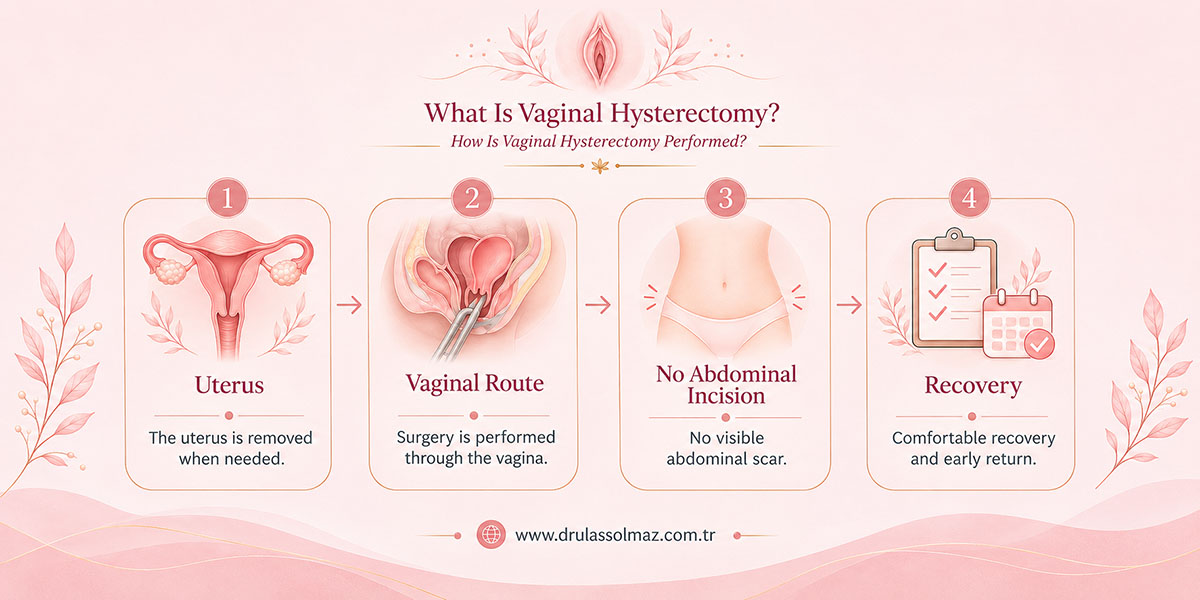
What Is Vaginal Hysterectomy?
Vaginal hysterectomy is the surgical removal of the uterus. It is generally preferred for conditions such as long-standing heavy bleeding, pain, a sensation of pressure, or cellular changes detected in the uterus. When necessary, the fallopian tubes and ovaries may also be removed along with the uterus.
Pregnancy is no longer possible after the uterus is removed. However, when the operation is properly planned, hormonal balance, sexual function, and overall quality of life can be preserved.
When Is Vaginal Hysterectomy Necessary?
Vaginal hysterectomy is a surgical method that can be safely used to treat many gynecological conditions originating from the uterus and significantly affecting a woman’s quality of life. The aim is not simply to remove the uterus, but also to permanently eliminate pain, bleeding, and symptoms that interfere with daily activities.
The most common conditions for which this method is preferred include:
Uterine Fibroids
Fibroids are benign growths that develop from the muscular tissue of the uterus. However, in some women, they may cause heavy menstrual bleeding, anemia, pelvic pain, discomfort during sexual intercourse, and pressure on the bladder. The surgical approach may vary depending on the number and size of the fibroids. While abdominal surgery may be necessary for very large fibroids, the uterus can be safely removed through the vaginal route in suitable cases.
Endometriosis
Endometriosis occurs when tissue similar to the lining of the uterus grows outside the uterus. This condition may cause pain, menstrual irregularities, and sometimes infertility when it affects the ovaries, fallopian tubes, or surrounding organs. Laparoscopic or robotic surgery is preferred for some patients with endometriosis. However, if the extent of the disease and the condition of the uterus are suitable, vaginal hysterectomy may also be an effective treatment option.
Adenomyosis
In adenomyosis, tissue from the uterine lining grows into the muscular wall of the uterus. This may cause the uterus to enlarge, severe menstrual pain, and heavy bleeding. In some women, symptoms may decrease after menopause. However, when the condition significantly affects quality of life, removal of the uterus may be necessary as a permanent solution.
Gynecologic Cancers and Precancerous Conditions
Hysterectomy is one of the main steps in the treatment of uterine cancer, cervical cancer, and cancers involving the uterine lining or ovaries. Today, laparoscopic or robotic surgery is frequently used, particularly in the treatment of endometrial cancer. In certain selected cases, vaginal hysterectomy may also be a treatment option depending on the stage and extent of the disease.
For more information about the differences between laparoscopic and robotic surgical techniques, you can read my article “Comparison of Laparoscopy and Robotic Surgery in Gynecologic Cancers.”
Uterine Prolapse (Pelvic Organ Prolapse)
When the ligaments and tissues supporting the pelvic floor become weakened, the uterus may descend from its normal position. This may lead to urinary incontinence, a feeling of vaginal fullness, pelvic pressure, and difficulties with bowel movements. Removing the uterus through the vaginal route and repairing the supporting tissues can significantly improve these symptoms.
Irregular and Heavy Menstrual Bleeding
If prolonged, frequently recurring, or excessively heavy menstrual bleeding cannot be controlled with medication or less invasive procedures, removal of the uterus may be considered. In such cases, hysterectomy offers a permanent and effective solution.
Chronic Pelvic Pain
In women experiencing long-standing pelvic pain that reduces their quality of life, hysterectomy may provide relief if the pain originates from a uterine condition and all other treatment options have failed. However, because chronic pelvic pain can have many different causes, the decision to perform surgery must be made only after a thorough evaluation and accurate diagnosis.
Our Experience With Vaginal Hysterectomy
In many medical centers, vaginal hysterectomy is recommended only for patients with uterine prolapse. However, we successfully perform this procedure in a much broader group of patients. Even when prolapse is absent, regardless of whether the uterus is large or small, and even in women who have never given birth, we are able to perform surgery through the vaginal route.
This surgery, performed through a natural anatomical route, is one of the most comfortable and aesthetically favorable methods, with a rapid recovery process.
How Is Vaginal Hysterectomy Performed?
This operation is performed through the vagina without making any incisions in the abdominal area. It is carried out under general or spinal anesthesia and usually takes between 45 and 90 minutes.
The main steps of the operation are:
- The uterus is accessed through the vaginal route.
- The ligaments supporting the uterus and the surrounding tissues are carefully released.
- The uterus is removed, together with the fallopian tubes and ovaries if necessary.
- Bleeding is controlled, and the vaginal tissues are carefully closed to achieve an aesthetically satisfactory result.
After the operation, no abdominal scars are left. Most patients are discharged the following day.
Advantages of Vaginal Hysterectomy
- The greatest advantage of this method is that it helps preserve a woman’s physical and psychological comfort.
- Since there is no abdominal incision, no abdominal scar remains, and pain is minimal.
- Blood loss is low, and the recovery period is short.
- The pelvic supporting tissues are preserved, reducing the risk of future prolapse or urinary incontinence.
- Vaginal structure and sexual functions are preserved.
- Women often feel lighter and more comfortable after surgery.
In summary, vaginal hysterectomy is one of the surgical approaches most compatible with female anatomy.
Recovery After Vaginal Hysterectomy
Recovery after vaginal hysterectomy is generally quite comfortable. Patients can usually get out of bed a few hours after surgery, and an overnight hospital stay is often sufficient.
The main points to consider during recovery are:
- Sexual intercourse should be avoided for approximately 6 weeks.
- Tampons and vaginal douching should not be used.
- Heavy lifting and straining should be avoided.
- Adequate rest, a balanced diet, and sufficient fluid intake help promote recovery.
Most patients can return to their daily activities within 2–3 weeks.
Are Hormones Affected After Removal of the Uterus?
This is one of the most frequently asked questions. Removing the uterus does not stop hormone production. The organs responsible for hormone production are the ovaries, not the uterus. If the ovaries are preserved during surgery, estrogen and progesterone production continues, and early menopause does not occur. Skin condition, energy levels, and sexual desire are preserved. If the ovaries also need to be removed, menopausal symptoms may develop; however, appropriate treatments can help maintain quality of life.
How Does Hysterectomy Affect Sexual Life?
A hysterectomy performed with the correct surgical technique does not negatively affect sexual life. On the contrary, many women who experienced pain, bleeding, or a sensation of pressure before surgery enjoy a more comfortable sexual life afterward. The structure and sensation of the vagina are preserved.
Women frequently report the following changes:
- Pain during sexual intercourse disappears.
- Bleeding and discomfort come to an end.
- Self-confidence and a sense of relief increase.
Scientific evidence shows that sexual satisfaction increases in many women after hysterectomy.
For further information on this subject, you can also read my article Sexual Life During Cancer Treatment.
Our Clinical Approach
For us, hysterectomy is not merely a surgical procedure; it is a process that helps women regain their quality of life. Thanks to our experience, we safely perform vaginal and minimally invasive surgical procedures in many patients, regardless of uterine size or the presence of prolapse.
Our goal is to preserve a woman’s bodily integrity, provide a rapid and natural recovery, and ensure that she feels safe throughout every stage of the process.
Who Is Not a Suitable Candidate for Vaginal Hysterectomy?
Although vaginal hysterectomy is a safe and comfortable method for many patients, it may not be the ideal option for every woman. The choice of surgical technique should be based on an evaluation of the patient’s anatomy, the type and extent of the underlying disease, previous surgical procedures, and overall health.
Vaginal hysterectomy may not be the first choice in the following situations:
- Cases involving an extremely enlarged uterus: A uterus that has become excessively enlarged may not be safely removed through the vaginal route. In these situations, abdominal or laparoscopic approaches may be preferred.
- Advanced-stage gynecologic cancers: When cancer has spread to surrounding tissues, abdominal or laparoscopic procedures requiring a wider surgical field may be necessary.
- Extensive intra-abdominal adhesions: Dense adhesions resulting from previous major abdominal surgeries may make vaginal surgery more difficult.
- Conditions requiring extensive surgical staging along with hysterectomy: The vaginal approach may not be suitable for patients who require lymph node removal or a detailed examination of the abdominal cavity.
Therefore, the most appropriate method for each patient should be determined individually after a detailed gynecological examination and imaging evaluation.
Frequently Asked Questions (FAQ)
Since the operation is performed through the vaginal route, there are no abdominal incisions or surgical scars.
Most patients can walk a few hours after surgery. Returning to normal daily activities usually takes 2–3 weeks.
The uterus does not produce hormones. If the ovaries are preserved, hormonal balance continues, and menopause does not begin prematurely.
If the ovaries are removed, menopausal symptoms may occur. When necessary, hormone therapy or supportive approaches may help maintain quality of life.
The operation does not directly cause weight gain. Weight changes are generally associated with lifestyle, diet, and hormonal status.
When the pelvic supporting tissues are properly repaired during surgery, the risk of recurrent prolapse is significantly reduced.
Women who work at desk jobs can generally return to work within 2–3 weeks. This period may be longer for jobs requiring physical exertion.
When performed on an appropriate patient by an experienced surgical team, vaginal hysterectomy is an extremely safe and effective surgical method.
What Causes Discharge After Intercourse? Is It Normal?
Noticing white, clear, or differently textured fluid coming from the vagina after sexual intercourse is [...]
Devamını okuNov
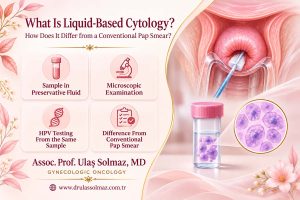
What Is Liquid-Based Cytology? Differences from a Pap Smear
Liquid-based cytology (LBC) is a method in which cells collected from the cervix are placed [...]
Devamını okuNov

What Are Lymph Nodes? Why Are They Important in Gynecologic Cancers?
Terms such as lymph node, lymphadenopathy, reactive lymph node, and lymph node involvement found in [...]
Devamını okuOct
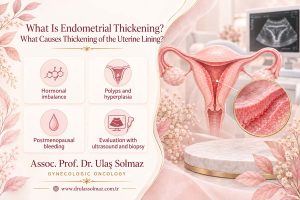
What Is Endometrial Thickening? What Causes Thickening of the Uterine Lining?
Endometrial thickening refers to the endometrium, the inner lining of the uterus, appearing thicker than [...]
Devamını okuOct

What Is the Difference Between an Ovarian Cyst and Ovarian Cancer?
An ovarian cyst is a structure that develops inside or on the surface of the [...]
Devamını okuAug
How Should Sexual Intercourse Be After HPV? Common Myths and Facts
HPV (Human Papillomavirus) is one of the most common sexually transmitted infections. A positive HPV [...]
Devamını okuAug

Sexual Life During Cancer Treatment
Sexual life during cancer treatment is a topic that is often left unspoken, yet it [...]
Devamını okuAug

Should You Tell Your Child or Family That You Have Cancer?
Receiving a cancer diagnosis can suddenly change the course of life. In the first days [...]
Devamını okuAug
