
What Is Gynecologic Oncology? Who Is a Gynecologic Oncologist and What Do They Do?
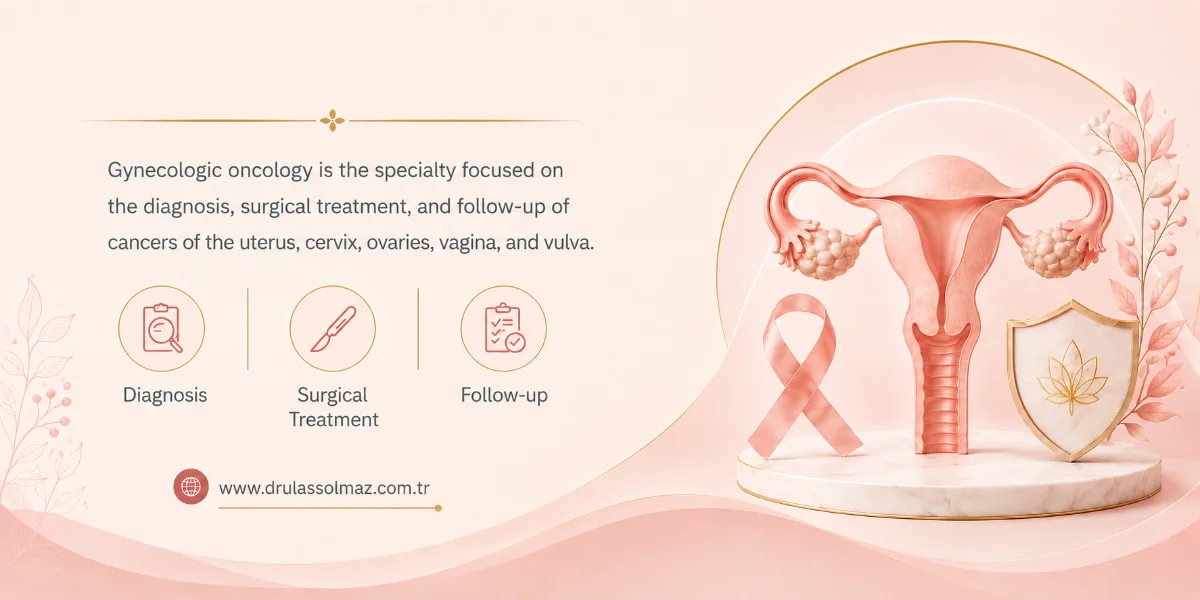
Gynecologic oncology is an advanced medical specialty that deals with the diagnosis, treatment and long-term follow-up of cancers originating from the female reproductive system. Cancers of the uterus, cervix, ovaries, fallopian tubes, vulva and vagina are the main areas of interest in this field.
Gynecologic oncology specialists, also known as gynecologic oncologists, are not only concerned with the treatment of cancerous tissue. They also focus on early diagnosis, the correct surgical approach, personalized treatment planning and the preservation of quality of life. The aim is to control the disease, prolong survival and manage the patient’s treatment process in the best possible way.
Gynecological cancers are important health problems that can affect both life expectancy and quality of life in women. Therefore, it is very important that the diagnosis and treatment process is managed by a specialist who has received specific training in this field. Gynecologic oncology does not only aim to treat the disease; it also takes into account a woman’s physical, psychological and social needs at every stage of the disease.
With this approach, the treatment offered to the patient is no longer a standard protocol. Instead, it becomes a personalized, evidence-based and holistic plan.
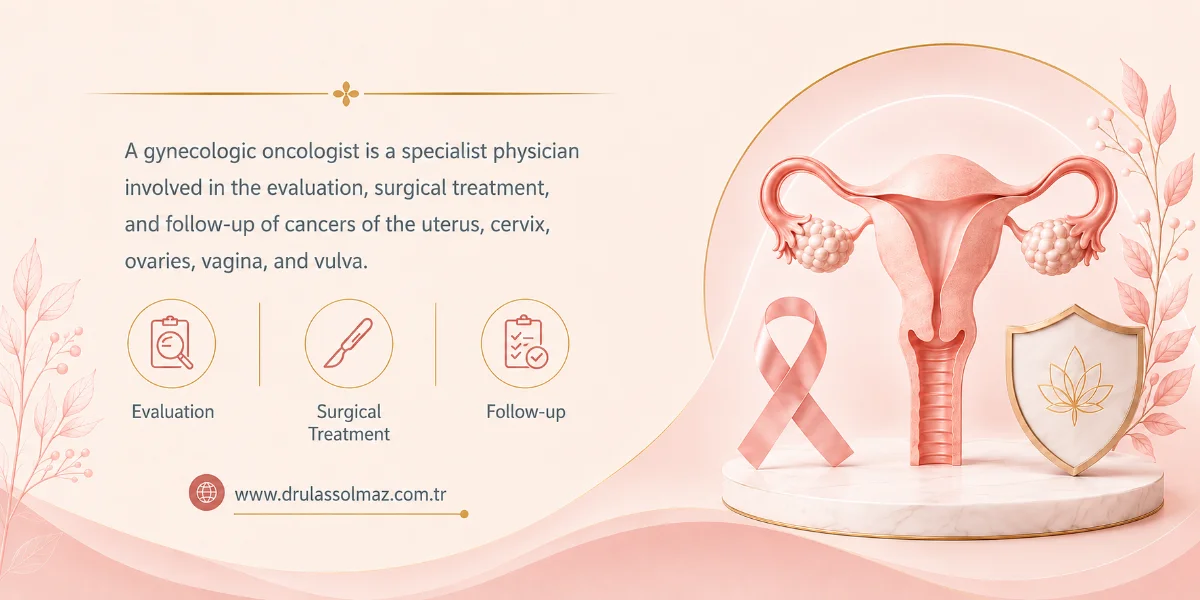
Gynecologic oncology is a modern branch of medicine that covers the diagnosis, treatment and follow-up of malignant diseases originating from the female reproductive organs. Gynecologic oncologists working in this field are physicians who have completed specialization in obstetrics and gynecology and then received advanced subspecialty training in gynecologic oncology.
The main goals of gynecologic oncology are to detect cancer at an early stage, determine the most appropriate surgical and medical treatment for the patient and achieve the highest possible treatment success through a multidisciplinary approach. During this process, gynecologic oncologists work in close collaboration with different disciplines such as medical oncology, radiation oncology, pathology, radiology and genetics.
Scientific studies have shown that when gynecological cancer surgeries are performed by gynecologic oncology specialists, complication rates are lower and long-term survival outcomes are better. For this reason, many national and international guidelines recommend that patients diagnosed with gynecological cancer be evaluated in gynecologic oncology centers.
Which Diseases Does a Gynecologic Oncology Specialist Treat?
A gynecologic oncologist, or gynecologic oncology specialist, generally treats patients with the following diseases.

Cervical Cancer
Cervical cancer is mostly associated with HPV infection. Regular smear tests and HPV screening help detect the disease at an early stage. Thanks to HPV vaccination and regular screening programs, cervical cancer is among the cancers that can be prevented and detected early.
Endometrial Cancer
Endometrial cancer, also known as uterine cancer, usually presents with abnormal vaginal bleeding after menopause. When diagnosed at an early stage, a high rate of recovery can be achieved with surgical treatment. Obesity, diabetes and hormonal irregularities are among the important risk factors.
You can find more detailed information about uterine cancer in my article “What Is Endometrial (Uterine) Cancer? Symptoms and Treatment.”
Ovarian Cancers
Ovarian cancers may not cause obvious symptoms in the early stages and are therefore often diagnosed at an advanced stage. Family history and BRCA1/2 gene mutations are among the important risk factors. In these cancers, the extent and quality of surgery directly affect treatment success.
For detailed information about ovarian cancer, you can read my article “What Is Ovarian Cancer? Symptoms and Treatment.”
Vulvar and Vaginal Cancers
These cancers are less common; however, they may present with symptoms such as itching, pain, changes in skin color or texture and bleeding. Early diagnosis significantly increases treatment success.
Fallopian Tube Cancers
These rare cancers often cause symptoms similar to ovarian cancer. Diagnosis is frequently made during surgery and requires multidisciplinary evaluation.
Precancerous and High-Risk Conditions
Gynecologic oncology is not involved only after a cancer diagnosis has been made.
- Preinvasive, or precancerous, lesions.
- Conditions such as cervical intraepithelial neoplasia (CIN) and atypical endometrial hyperplasia are closely monitored and treated at the appropriate time because they carry a risk of turning into cancer.
- Genetic and hereditary cancer syndromes.
- In patients with BRCA1/2 mutations and Lynch syndrome, personalized follow-up plans and preventive surgical options are evaluated when necessary.
- Gestational trophoblastic diseases.
- Molar pregnancy and related diseases are rare, but they require specific knowledge and experience and are evaluated within the field of gynecologic oncology.
Why Is Gynecologic Oncology a Separate Specialty?
Although gynecologic oncology is an extension of obstetrics and gynecology, it is a separate subspecialty that requires advanced surgical experience and oncological knowledge. Surgeries in this field may be long, complex procedures involving multiple organs and carrying a high risk of complications.
For this reason, gynecologic oncology specialists are physicians who have received special training in comprehensive cancer surgery, minimally invasive techniques such as laparoscopic and robotic surgery, lymph node dissections and multidisciplinary treatment planning. I see my gynecologic oncology patients at my private clinic in İzmir throughout their diagnosis, treatment and follow-up processes.

What Is the Difference Between an Ovarian Cyst and Ovarian Cancer?
An ovarian cyst is a structure that develops inside or on the surface of the [...]
Devamını okuAug

How Should Sexual Intercourse Be After HPV? Common Myths and Facts
HPV (Human Papillomavirus) is one of the most common sexually transmitted infections. A positive HPV [...]
Devamını okuAug

Sexual Life During Cancer Treatment
Sexual life during cancer treatment is a topic that is often left unspoken, yet it [...]
Devamını okuAug

Should You Tell Your Child or Family That You Have Cancer?
Receiving a cancer diagnosis can suddenly change the course of life. In the first days [...]
Devamını okuAug

What Causes Vaginal Itching? How Can Vaginal Itching Be Relieved?
Vaginal itching is a common complaint that can negatively affect daily life. Although it is [...]
Devamını okuJul
Comparison of Laparoscopy and Robotic Surgery in Gynecological Cancers
Both laparoscopy and robotic surgery are minimally invasive surgical methods. In other words, these procedures [...]
Devamını okuJun
Advantages of Laparoscopic Surgery in Endometrial (Uterine) Cancer
Laparoscopic surgery is one of the surgical methods used in the treatment of endometrial cancer, [...]
Devamını okuJun
