
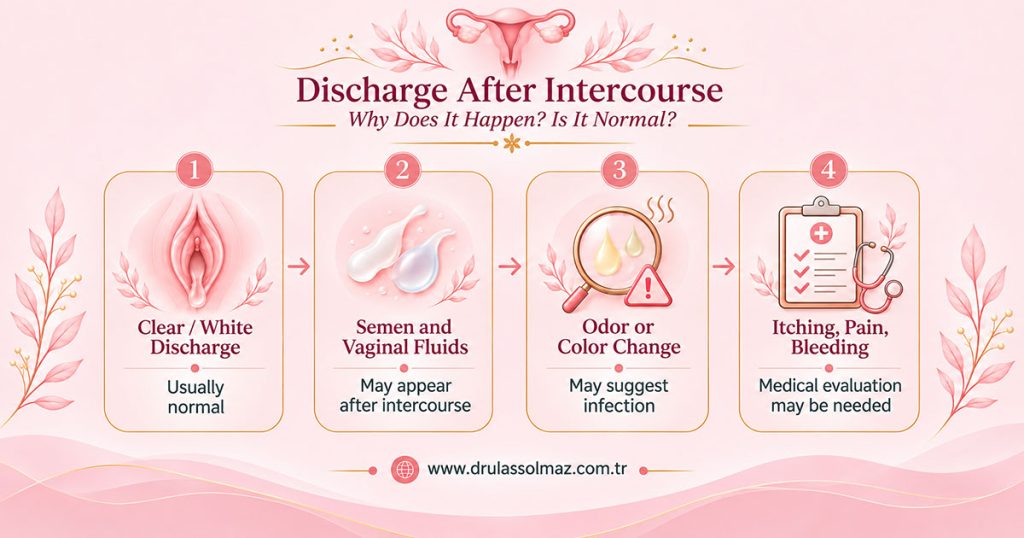
Noticing white, clear, or differently textured fluid coming from the vagina after sexual intercourse is something many women experience. This discharge may result from natural vaginal secretions, semen, or lubricants used during intercourse.
Discharge after intercourse is usually normal. However, noticeable changes in the color, odor, or consistency of the discharge, or accompanying symptoms such as itching, burning, and pain, may require further investigation.
Is Discharge After Intercourse Normal?
The vagina produces secretions that help keep it moist and maintain its natural balance. The amount of these secretions may vary depending on the menstrual cycle, hormonal changes, and sexual arousal.
An increase in vaginal secretions during sexual intercourse is natural. When these secretions are released afterward, they may create the impression of excessive vaginal discharge.
Following unprotected vaginal intercourse, some semen may also flow out of the vagina. Similarly, lubricants used during intercourse may mix with vaginal secretions. Clear or white discharge that has no noticeable unpleasant odor and does not cause other symptoms is generally considered normal.
What Causes White or Clear Discharge After Intercourse?
The most common causes of white or clear discharge after intercourse are vaginal secretions, semen, and lubricants. Vaginal lubrication increases during sexual arousal. These secretions may continue to flow out for some time after intercourse. Particularly around ovulation, vaginal discharge may become clearer, more slippery, and stretchy.
Whitish fluid noticed after unprotected intercourse may result from a mixture of semen and vaginal secretions. However, thick, lumpy, or cottage cheese-like white discharge accompanied by itching may suggest conditions such as a vaginal yeast infection.
For more information about the causes of itching and irritation associated with vaginal discharge, you can read my article “What Causes Vaginal Itching and How Can It Be Relieved?“.
What Causes Foul-Smelling Discharge After Intercourse?
Mild and temporary changes in the odor of vaginal discharge may occur after intercourse. However, a strong, unpleasant, or persistent odor may be a sign of a vaginal infection.
In particular, a fishy odor that becomes more noticeable after intercourse may be associated with bacterial vaginosis, a condition caused by an imbalance in the natural bacteria of the vagina. Certain sexually transmitted infections may also cause changes in the color, odor, and amount of vaginal discharge.
If the discharge is yellow, green, or frothy, or if it is accompanied by burning during urination or pelvic pain, it is important to determine the cause through a medical examination and appropriate tests.
A definitive diagnosis cannot be made based solely on the color or odor of vaginal discharge.
What Does Pink Discharge After Intercourse Mean?
Pink discharge after intercourse may occur when a small amount of blood mixes with vaginal secretions. Vaginal dryness, irritation caused by friction, or certain changes in the cervix may lead to this condition.
However, if pink discharge recurs, develops into noticeable bleeding, or is accompanied by pain, its underlying cause should be investigated. Bloody or pink discharge occurring after menopause should be evaluated without delay.
I have discussed the possible causes of this condition and when it may be important in my article “When Is Bleeding After Sexual Intercourse Serious?“.
When Should You See a Doctor for Discharge After Intercourse?
Natural vaginal secretions or residual semen noticed after intercourse usually decrease within a short time. However, the amount and duration of discharge may vary from person to person. What matters is whether there has been a noticeable change in the person’s usual discharge pattern.
A gynecological examination is recommended in the following situations:
- Discharge has an unpleasant odor or the odor persists.
- Yellow, green, or gray discharge occurs.
- Discharge is accompanied by itching, burning, or irritation.
- Pain occurs during or after intercourse.
- Pink, brown, or bloody discharge recurs.
- Lower abdominal or pelvic pain is present.
- There is a noticeable and persistent change in the amount or consistency of discharge.
If symptoms such as fever or severe lower abdominal pain occur, medical evaluation should be sought promptly. When necessary, the cause of the symptoms may be investigated through a gynecological examination, analysis of a vaginal discharge sample, or tests for infections.
Vaginal douching or using antibiotics and vaginal medications without a doctor’s recommendation may disrupt the vagina’s natural balance and delay an accurate diagnosis.
The main approach to evaluating discharge after intercourse is to distinguish normal vaginal secretions from conditions that require treatment. The characteristics of the discharge and any accompanying symptoms are assessed together, and appropriate treatment can be planned when necessary.
This content is intended for general informational purposes only. The cause of vaginal discharge and the need for treatment should be evaluated according to each patient’s symptoms and examination findings.
References
- NHS – Vaginal Discharge
- CDC – Diseases Characterized by Vulvovaginal Itching, Burning, Irritation, Odor or Discharge
- CDC – About Bacterial Vaginosis
- CDC – Urethritis and Cervicitis
