
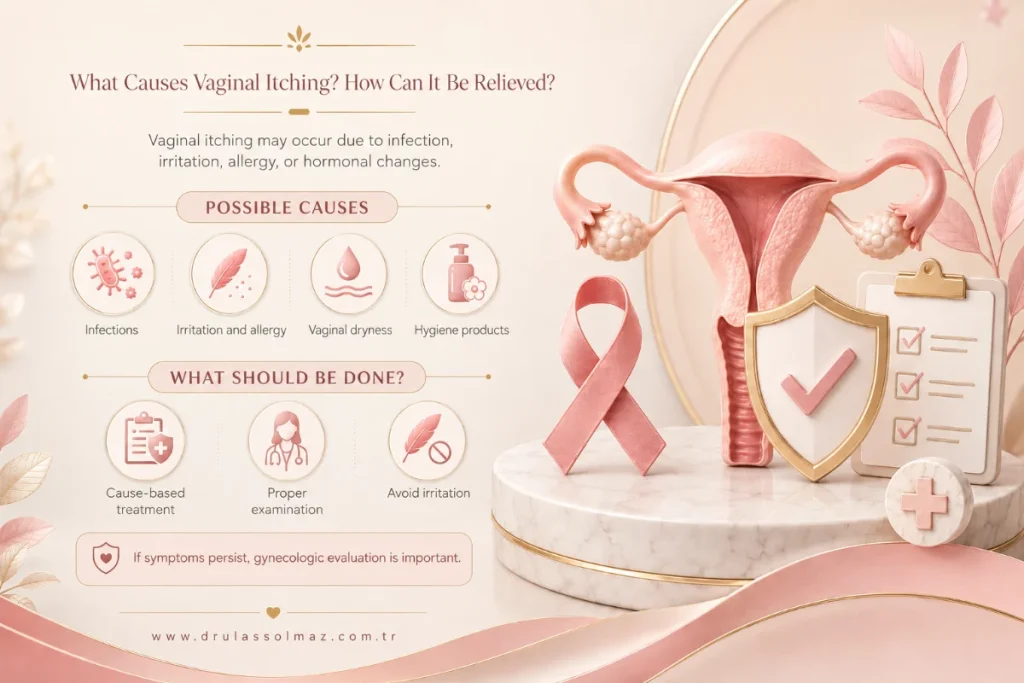
Vaginal itching is a common complaint that can negatively affect daily life. Although it is commonly referred to as “vaginal itching,” the itching often affects the vaginal opening and the external genital area, known as the vulva.
Yeast infections, irritation, allergic reactions, hormonal changes, and certain skin conditions are among the most common causes. In most cases, the underlying cause is minor and treatable. However, persistent or recurrent itching, especially when accompanied by sores, bleeding, or skin changes, should not be ignored.
What Is Vaginal Itching?
Vaginal itching is an uncomfortable itching sensation around the vaginal opening or external genital area. It may sometimes be accompanied by burning, redness, discharge, an unusual odour, irritation, or pain.
Vaginal itching is not a disease itself but a symptom that may develop due to different conditions. Identifying the cause is important for planning the appropriate treatment.

What Causes Vaginal Itching?
Vaginal and vulvar itching are most commonly associated with infections, irritation, allergic reactions, hormonal changes, and skin conditions.
Vaginal Yeast Infections
Vaginal yeast infections are a common cause of itching. The itching may be accompanied by burning, redness, and white or thick discharge. Antibiotic use, diabetes, a weakened immune system, and disruption of the natural vaginal flora may increase the risk of yeast infections. However, a diagnosis should not be made based on symptoms alone, as different conditions can cause similar complaints.
Bacterial and Parasitic Infections
Bacterial vaginosis usually causes thin grey or white discharge and a noticeable odour. Some women may also experience itching and irritation. Certain infections, such as trichomoniasis, may cause itching together with burning, discharge, and discomfort during urination.
Irritation and Allergic Reactions
Because the genital area is sensitive, certain products and practices may cause irritation or allergic reactions.
Possible triggers include:
- Perfumed soaps and shower gels
- Vaginal douching
- Scented sanitary pads and panty liners
- Laundry detergents
- Some latex-containing products
- Tight or non-breathable clothing
- Shaving and waxing
Neglecting genital care may cause problems, but excessive washing and the use of harsh cleansing products can also disrupt the natural balance and lead to irritation.
Hormonal Changes and Menopause
Changes in oestrogen levels can affect the genital tissues. During menopause, thinning and dryness of the vaginal tissues may cause itching, burning, and sensitivity. Hormonal changes during menstruation and pregnancy may also increase sensitivity in the genital area in some women.
Skin Conditions
Certain skin conditions, including eczema, contact dermatitis, and lichen sclerosus, may cause persistent vulvar itching. Medical evaluation is particularly important when long-lasting itching is accompanied by whitening, thickening, cracking, or sores on the skin.
Sexually Transmitted Infections
Some sexually transmitted infections can cause itching, burning, or lesions in the genital area. Genital herpes, trichomoniasis, and genital warts may be associated with these symptoms. Most HPV infections do not cause symptoms. However, genital warts caused by certain HPV types may cause itching or irritation.
Other Causes
Diabetes, certain conditions affecting the immune system, and some medications may also be associated with genital itching. In rare cases, precancerous changes of the vulva or vulvar cancer may also cause persistent itching. For this reason, itching that does not resolve or is accompanied by other symptoms should not be ignored.
How Can Vaginal Itching Be Relieved?
Treatment for vaginal itching depends on the underlying cause. Yeast infections, bacterial or parasitic infections, allergies, hormonal changes, and skin conditions require different treatments.
Depending on the cause, treatment may include:
- Antifungal medication for yeast infections
- Appropriate medication for certain bacterial or parasitic infections
- Avoiding the product responsible for irritation or allergy
- Treatments recommended by a doctor for menopause-related dryness
- Condition-specific creams or medication for skin disorders
Using medication without knowing the cause of the itching is not recommended. Incorrect treatment may prolong symptoms or delay identification of the actual cause.
Can Creams Be Used for Vaginal Itching?
Creams may be used to treat vaginal or vulvar itching, but the appropriate product depends on the cause. Yeast infections, skin conditions, and menopause-related symptoms require different treatments. For this reason, using random creams without an examination is not recommended. The wrong product may prolong or worsen the symptoms.
What Causes Persistent Vaginal Itching?
Vaginal itching that does not improve within a few days or frequently recurs may have several underlying causes.
Possible causes of persistent itching include:
- Recurrent yeast infections
- Chronic vaginal infections
- Allergic or irritant reactions
- Skin conditions such as lichen sclerosus
- Menopause-related dryness
- Poorly controlled diabetes
- Persistent skin changes in the genital area
When itching is recurrent or long-lasting, simply relieving the symptom is not enough; the underlying cause should be identified.
Can Vaginal Itching Be a Sign of Cancer?
Most vaginal or vulvar itching is not caused by cancer. Infections, irritation, allergies, and skin conditions are far more common causes.
However, persistent itching of the vulva should be evaluated if it is accompanied by:
- A sore that does not heal
- A lump or raised area
- Changes in skin colour
- Bleeding
- Pain
- A wart-like lesion
These findings do not always mean cancer. However, a gynaecological oncology assessment and further investigation may be necessary in some cases.
When Should You See a Doctor for Vaginal Itching?
Mild, short-term itching may be caused by simple irritation. However, medical evaluation is recommended in certain situations.
You should see a doctor if:
- The itching lasts more than a few days
- The symptoms frequently recur
- There is unusual or foul-smelling discharge
- Bleeding occurs
- You notice a sore, lump, or skin change on the vulva
- There is severe burning or pain
- There is significant discomfort during urination
- Symptoms continue despite treatment
In particular, persistent vulvar itching should not be ignored.
What Should You Pay Attention to When You Have Vaginal Itching?
Some simple measures may help reduce irritation and prevent symptoms from worsening:
- Avoid perfumed soaps and genital hygiene products
- Do not use vaginal douches
- Avoid excessive washing of the genital area
- Prevent the area from remaining damp
- Change out of wet swimwear and damp clothing
- Wear comfortable, cotton underwear
- Avoid tight and non-breathable clothing
- Try not to scratch the area
- If you have diabetes, maintain good blood sugar control
- Avoid self-treatment when symptoms recur
Applying vinegar, baking soda, tea tree oil, garlic, or similar substances to the genital area is not recommended. These products may irritate sensitive tissues and worsen symptoms.
Brief Overview
Vaginal or vulvar itching can develop for many reasons, including infection, irritation, allergic reactions, hormonal changes, and skin conditions.
Treatment should be planned according to the underlying cause. In particular, persistent or recurrent itching, or itching accompanied by sores, bleeding, or skin changes, should be assessed by a specialist rather than treated without medical advice.
Frequently Asked Questions
What causes vaginal itching and white discharge?
White, thick, or cottage cheese-like discharge accompanied by itching and burning may suggest a vaginal yeast infection. However, similar symptoms can occur for other reasons, so a definite diagnosis requires medical evaluation.
What causes vaginal itching and burning?
Itching and burning may be caused by infections, irritation, allergic reactions, skin conditions, or hormonal changes.
What causes vaginal redness and itching?
Redness and itching are most commonly associated with irritation, allergy, or infection. Tight clothing, perfumed products, and certain hygiene products may also cause these symptoms.
What causes vaginal itching before a period?
Hormonal changes before menstruation may increase sensitivity in the genital area. Sanitary pads or hygiene products may also cause irritation. If itching is accompanied by discharge or burning, medical evaluation may be needed.
What causes vaginal itching during pregnancy?
Hormonal changes during pregnancy may affect the vaginal flora and genital tissues. Yeast infections and other infections may also cause itching.
Medication during pregnancy should only be used on the advice of a doctor.
What causes vaginal itching during menopause?
Lower oestrogen levels during menopause may cause thinning and dryness of the vaginal tissues. This can lead to itching, burning, and sensitivity.
Why does vaginal itching get worse at night?
At night, itching may feel more noticeable because there are fewer external distractions. Heat, sweating, and friction may also worsen symptoms.
Can vaginal itching delay a period?
No. Vaginal itching itself does not delay menstruation. However, hormonal conditions may sometimes contribute to both menstrual changes and genital symptoms.
Is vaginal itching a sign of pregnancy?
Vaginal itching is not a direct sign of pregnancy. However, hormonal changes during pregnancy may cause itching and sensitivity in some women.
Can vaginal itching go away on its own?
Mild itching caused by irritation may improve when the triggering factor is removed. However, persistent, worsening, or recurrent itching should be investigated.
